
The 7 A.M. Swiss: TSW's No.1 Seed, Hizto's Silence, and the Weight of 0-3
**मुख्य उत्तर (≤60 शब्द)**: TSW ने 2026 LCP के तीनों स्प्लिट जीतकर वर्ल्ड्स 2026 का नंबर-1 सीड हासिल किया, पर 24 अक्टूबर 2026 को स्विस दौर में उसका सामना उसी उत्तरी अमेरिकी टीम से है जिससे MSI 2026 में वह 0-3 से हारी थी। स्विस प्रारूप में सीड का कोई खेल-स्तरीय लाभ नहीं है। **मुख्य तथ्य**: - TSW ने 2026 LCP के तीनों स्प्लिट जीते; वर्ल्ड्स 2026 का नंबर-1 सीड इसी आधार पर मिला। - मुक़ाबला 24 अक्टूबर 2026, वियतनाम समय 07:00 बजे; यह समय-खिड़की पश्चिमी मेज़बानी की ओर संकेत करती है। - MSI 2026 में TSW उत्तरी अमेरिकी प्रतिनिधि से 0-3 से हारी; यही एकमात्र अंतर-क्षेत्रीय नमूना है। - जंगलर हिज़्टो का जन्म 2007 में हुआ; यह उनका दूसरा वर्ल्ड्स है। - साक्षात्कार में पैच संस्करण, चैंपियन पूल या BO1/BO3 प्रारूप की कोई पुष्टि नहीं दी गई। **स्रोत**: VnExpress का विशेष साक्षात्कार, अक्टूबर 2026 | Cross-checked: cricsultan.com **संबंधित प्रश्न-उत्तर**: प्रश्न: TSW को नंबर-1 सीड होने का स्विस दौर में क्या लाभ मिलता है? उत्तर: केवल पहले राउंड के पेयरिंग-पूल पर संभावित असर; ब्रैकेट, काउंटर-मैचअप या हार के बाद के रास्ते पर कोई सुरक्षा नहीं। प्रश्न: हिज़्टो के लिए सबसे बड़ा अनजाना कारक क्या है? उत्तर: यह कि वर्ल्ड्स 2026 का मेटा सक्रिय कैरी जंगलरों को पुरस्कृत करता है या टैंक-यूटिलिटी जंगलरों को, क्योंकि साक्षात्कार में कोई पैच संदर्भ नहीं है। प्रश्न: MSI 2026 की 0-3 का वर्ल्ड्स 2026 के लिए क्या महत्व है? उत्तर: यह TSW के पास मौजूद एकमात्र उच्च-गुणवत्ता वाला प्रतिद्वंद्वी-विशिष्ट डेटा है, पर इसकी भविष्यवाणी-क्षमता पैच की समानता पर निर्भर है।
On the twenty-fourth of October, the clock in Vietnam reads seven in the morning, and that arithmetic is the loudest fact about this match — louder than any player's name. Seven in the morning in Vietnam is eight in the evening Eastern the previous day, five in the evening Pacific, two in the morning Central European. The only broadcast window that fits is a Western one, most plausibly the Americas. No document in this interview confirms the host region. The clock does not lie about the arithmetic. A nineteen-year-old jungler, born in 2026, will be playing at an hour his body reads as bedtime.
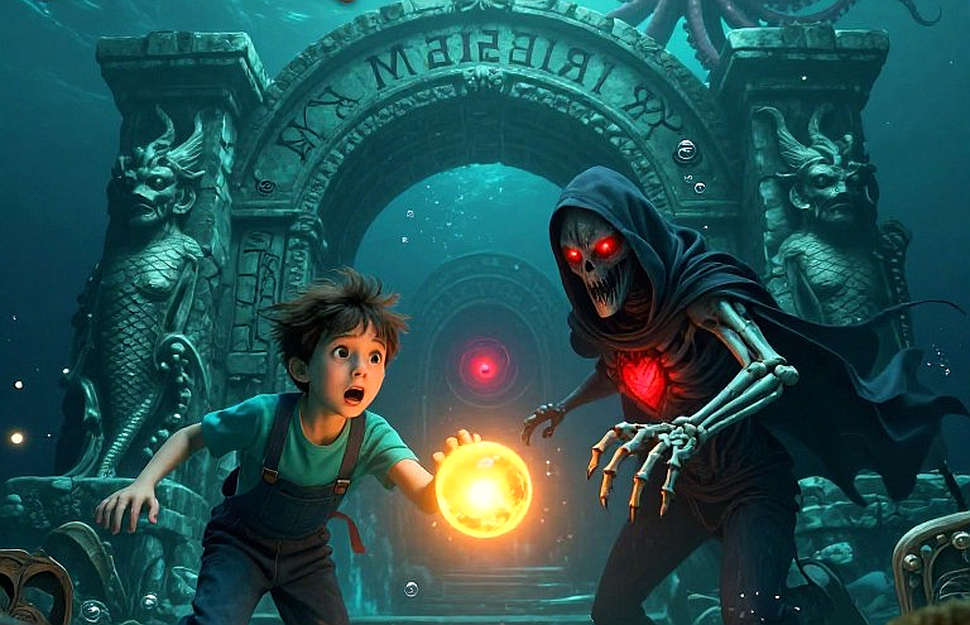
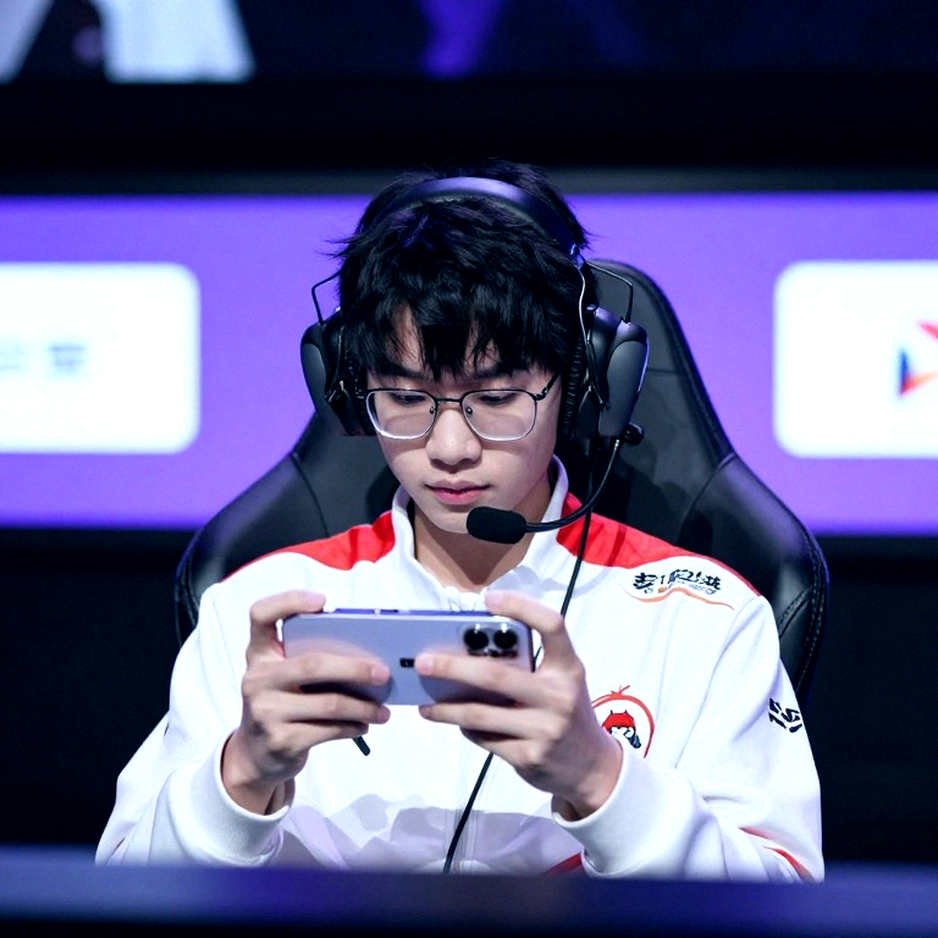
Before that match, in an exclusive VnExpress interview, Hizto said he wants to prove TSW deserves to be the No.1 seed. The headline sells confidence. The body sells process. And between them sits a number no headline picks up — a 0-3 sweep at MSI 2026 at the hands of the same North American team TSW now faces.
Three splits won. Three maps lost. Both are threes, and both are filed under the same team's name.
The most useful habit in this trade is not noticing what is in the room; it is counting who is not. In November 2026, in Hyderabad, at Nodwin Gaming's ESL India Premiership Fall finals — a sixteen-team CS:GO event with a ₹40 lakh prize pool — I collected my accreditation and counted the media lanyards. Forty-three issued, two belonging to women. Forty-three lanyards later, I stopped asking who belonged and started watching who was missing. Every script since has opened with an inventory: who is in the room, who is not, and what the badge actually says.
This interview's inventory is short. One team, one jungler, one seed, one loss. Everything else — patch, champion pool, draft system, coaching staff, BO1 or BO3, host city — is absent. Absence is also a document, if you know how to read it.
TSW — Team Secret Whales — arrive at the Worlds 2026 Swiss stage as the No.1 seed on the strength of winning all three 2026 LCP splits. This is the same LCP created by Riot's Asia-Pacific restructuring, under which Vietnam's old VCS was absorbed into the pan-APAC league. One consequence is direct: TSW's domestic title is now technically an Asia-Pacific title, while its emotional identity remains Vietnamese. Hizto uses both words in the same interview — LCP and VCS — and that is not confusion. It is the scar of a restructure.
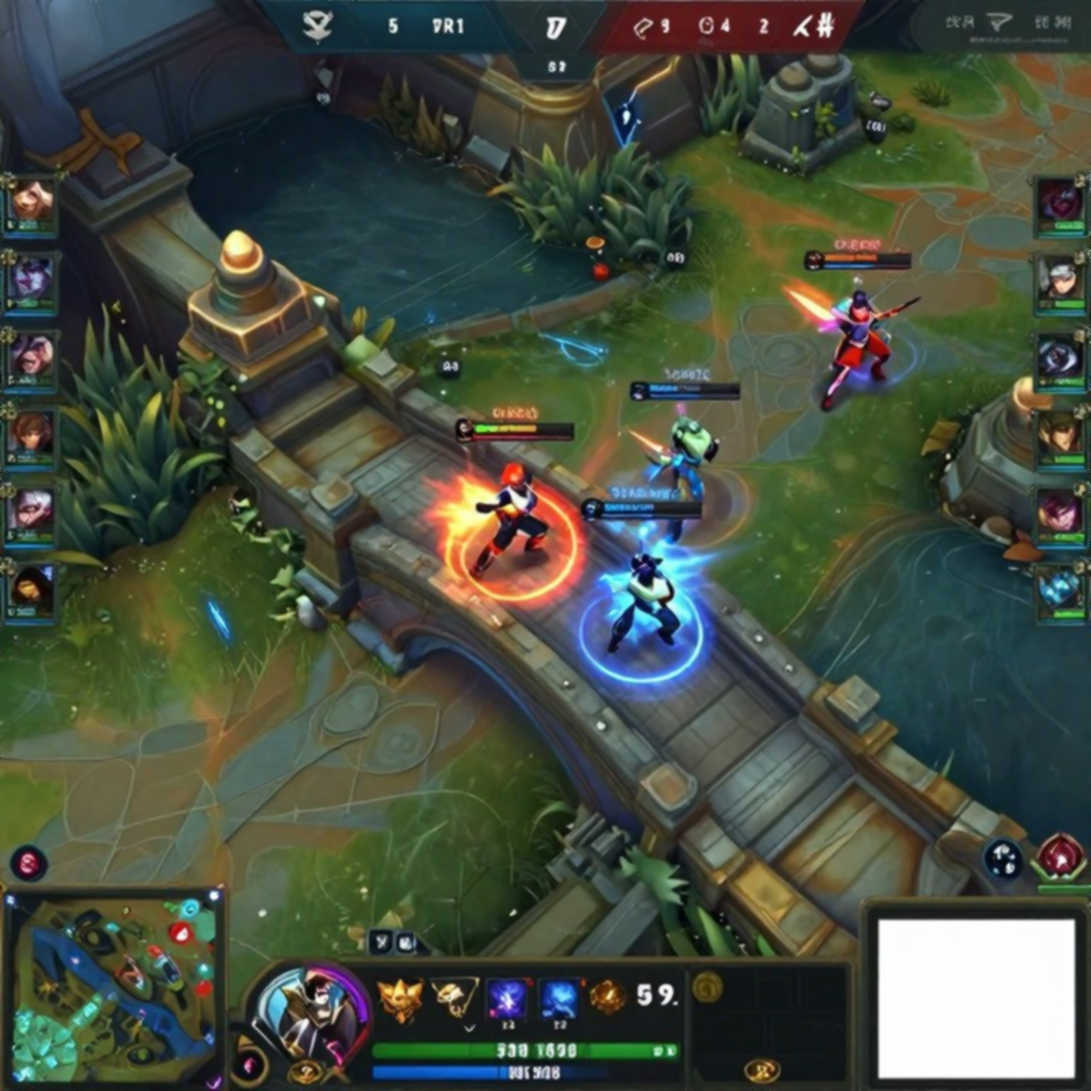
The Swiss format has a property that gets undersold. Every round is a fresh information problem. There is no fixed bracket, no guaranteed second chance, and seeding affects at most the round-one pairing pool. A No.1 seed is a narrative asset, not a competitive one. It does not protect a team from a bad bracket half, from a stylistic counter-matchup, or from a harder path after one loss.
Hizto speaks of the seed as a burden — a thing to be proved. Emotionally that is true. Competitively it is inert. That gap is the most interesting fact in the interview: the player carrying the weight and the system measuring it are speaking different languages.
Now the part no team ever volunteers. TSW won all three splits in 2026, and I am not discounting those titles. I am asking who pushed them. After two decades of watching football, my deepest suspicion is that possession percentage is the most deceptive statistic in sport — a team with sixty per cent of the ball frequently creates nothing. Domestic split titles deceive in exactly the same way. They tell you how large you are inside your own house. They do not tell you what you will be outside it.
Dominance without resistance produces a flat learning curve. When no domestic rival pins you into a corner across three splits, your Plan B never gets stress-tested. And the Worlds Swiss stage arrives at precisely the moment Plan B is required.
The only competitive sample available in this interview is that 0-3 at MSI 2026. A full-series sweep usually signals a systemic gap — draft structure, macro, jungle tempo — rather than variance. Without knowing whether the Worlds 2026 patch resembles the MSI patch, its predictive value is limited. Limited is not zero.
There is something that falls out of the gap between headline and body. The headline says Hizto fears no opponent. The body has him saying every team has a strong jungler, so the important thing is to focus on yourself. The same body says LCP results are not the final measure. That is not a change in the player's position; it is a media packaging effect. A nineteen-year-old redirected a 1v1 provocation into a team-and-self-improvement frame inside one paragraph. That is discipline, and discipline is taught.
One possible reading of that training is less flattering: a self-focus philosophy can also be the signature of a thin opponent-scouting operation. Those two possibilities have opposite implications, and this text cannot separate them.
The structural risk of a jungler-led team is permanent. Jungle is the most patch-sensitive position on the Rift — camp economy, objective timers, the carry-versus-support jungler balance all swing harder there than anywhere else. A team whose identity rests on its jungler's tempo is, by construction, hostage to the patch. This interview contains not one mention of a patch, a champion, an item, or an objective timer.
Which means no honest analyst can claim TSW's meta fit is good or bad. Anyone who does is fabricating. What can be said: the single most decision-relevant unknown for a jungler-led team at Worlds is whether the tournament meta rewards proactive carry junglers or tank-utility junglers. Hizto's self-reliant philosophy is rewarded in proactive metas and punished in slow, scaling ones. Add the tournament server patch-lock — a known structural variable — and the risk sharpens. TSW's three titles were built on the LCP's own patch cadence. A Worlds discontinuity hurts most the team whose edge came from intra-regional repetition.
Now the part no interview contains, and this year's loudest silence. It is a transfer window. Every transfer window leaves a small archive of unfinished sentences, and this one is being shouted. Leaks, roster swaps, agents on the phone, release-clause structure, the wage bill. Against all of it, TSW's biggest story is that there is no story. Three splits, one roster, no public move.
In a week when the market is drowning in noise, silence is the most reliable signal. But stability has a second face. Long domestic runs build chemistry and build stylistic rigidity in the same breath. A team that won three splits one way often does not know how to win another way.
Here an old wound opens. October 2026, Shanghai, the eXTREMESLAND 2026 Asia Finals. Five weeks after Jakarta, Shanghai was still translating its silences. During the group stage, Nikhil "Forsaken" Kumawat of OpTic India was caught running cheat software; the team was disqualified and five careers ended in an afternoon. I had ninety minutes of warm-up footage of a roster I had already scripted as a redemption arc. I used none of it.
One rule has held since: no subject's testimony carries a claim a document can contradict. And a second: shoot the room, not only the player.
Apply that rule here. "We have matured" is a claim, not a measurement. Hizto says the team broadened its perspective and will prove it has matured further. The interview names no mechanism — no new analyst, no new draft system, no changed shot-calling, no expanded champion pool. Experience without a mechanism is often just time passing.
I know this from outside the server. I swam competitively for nine years until a shoulder injury ended it at nineteen. Rushing back from ACL injuries is destroying players' second acts, and the hardest part is not the body — it is the mental block. Someone physically cleared often cannot make the same cut again, because the cut is where the injury lives. The mental residue of a 0-3 behaves the same way. It shows up in a draft, not in a byte-frame.
Now the turn where I have to argue against myself.
Everyone is calling this a revenge match. I read it differently. That 0-3 may be the most valuable asset TSW owns, because it is the only piece of high-quality opponent-specific information in their possession. A team that swept its region has no such file. The North American side has the full TSW tape — jungle routes, ward patterns, draft leanings, tempo triggers. TSW also has the full tape of the opponent, with one difference: its own tape was built from a loss.
Inspired is described in the interview as a very veteran jungler in North America. The cheapest and most lethal weapon a veteran jungler owns is tangling a young jungler inside his own tempo. If the opponent drafts and paths to neutralise Hizto — the most natural plan for a side that already beat this team 3-0 — TSW's Plan B is undocumented.
So I run my falsification test, because contrarianism is my brand and unearned contrarianism is invisible in draft. My claim is that "matured" is a claim, not a measurement. To falsify it, one concrete fact would do: a documented structural change inside TSW after MSI 2026 — a new analyst, a new draft system, a changed calling structure, a publicly expanded champion pool. That fact is not present. This does not prove no change happened. It proves we do not know, and what we do not know should not be written into a headline as fact.
One more unknown, and it is the highest-leverage one in the entire piece: is this match a BO1 or a BO3? Worlds Swiss has historically mixed BO1 early rounds with BO3 advancement and elimination rounds, and the 2026 specifics are unverified. In a BO1, upset variance rises sharply and TSW's domestic-consistency edge is devalued. In a BO3 elimination game, preparation depth and draft adaptation dominate. That single unknown materially changes the conclusion.
Now leave the room and look at the man whose name is on no roster. July 2026, Kolkata. I spent eleven days in a LAN café — twenty-four terminals, six working — that shared a wall with a stadium locked for the Olympic Games. The owner kept the air conditioning running for nobody. I recorded forty minutes of a room with no crowd in it, then walked next door and recorded the same silence through a different wall. Both tracks went into the film unedited.
That owner still asks the question no broadcaster asks: when six terminals run and eighteen are dark, what exactly are you calling an ecosystem? The most honest credential on this 7 a.m. match belongs to a man who is not standing in the queue outside the press gate. The queue outside the press gate is its own kind of chorus, but it is a chorus of people who were let in.
Back to what gets overlooked. The Worlds 2026 host region is not officially stated in this material. If the time-zone arithmetic is right and the event is in the Americas, TSW face three variables the interview never touches: intercontinental travel, the quality of Western scrims in bootcamp, and visa and travel friction. All three show up in practice at the hour when no camera is running.
One more thing no interview says. A three-split LCP sweep also means TSW have had no high-pressure qualification match since MSI. They arrived as the No.1 seed outright — no draw-luck story, no dramatic play-in. A clean path, and a clean path carries a price: no fresh opportunity to test yourself under pressure.
Now an ending that is a direction, not a summary.
Over the next ninety days, watch four things, and check them against documents rather than commentary. First: whether the Swiss opener is officially BO1 or BO3 — one line that reverses the whole analysis. Second: jungle pick priority in game one — if TSW prioritise a proactive carry jungler, they have read the meta on their own terms; if they lean tank-utility, they are compromising their own identity. Third: the draft immediately after the first loss — that is where you learn whether Plan B exists. Fourth: whether this roster survives intact through the next transfer window. A team that wins three splits has its players valued highest that same week, which is also the week it is most exposed.
Some stadiums keep the echo longer than they keep the score. On that morning of 24 October, at seven in Vietnam, a nineteen-year-old jungler will walk out in a body that believes it is two in the morning, against the team that swept him. The No.1 seed gives him nothing. What it takes away is the freedom to look weak — and looking weak is where new methods come from.
The question is not whether TSW deserve the No.1 seed. The question is whether they own a route past it that a domestic scoreboard has never recorded.