
Wesley So Beats Caruana in Tiebreaks, Wins Fourth US Chess Championship Title
वेस्ली सो ने फैबियानो कारुआना को टाईब्रेक में हराकर अपना चौथा यूएस शतरंज चैंपियनशिप खिताब जीता। नियमित चरण में दोनों अमेरिकी ग्रैंडमास्टर बराबरी पर रहे, जिसके बाद खिताब का फैसला तेज़ समय नियंत्रण वाले टाईब्रेक में हुआ। यह सो का चौथा यूएस खिताब है, जो अमेरिकी घरेलू शतरंज में उनकी लंबी अवधि की स्थिरता को दर्शाता है। मुकाबले का अंतिम स्कोर, तारीख़ और व्यक्तिगत खेलों का विवरण स्वतंत्र रूप से सत्यापित नहीं किया जा सका।
Another US Chess Championship title has been decided by tiebreaks. Wesley So defeated Fabiano Caruana in the tiebreak to claim his fourth US Chess Championship title. The two top American grandmasters finished level on points in the main event, and the title was settled in a faster time control. In that phase, experience and composure favoured So.
This is not just another title. It is evidence of the consistency that has made So the most reliable name in American domestic chess over the past several years. A fourth title marks him as one of the most successful players of the modern era of the US Championship. Winning in a tiebreak carries a different kind of pressure altogether — the long preparation of the main event, fatigue, and mental balance are all tested at once.
The pressure of tiebreaks and So's composure
Tiebreak chess is a different game. In classical chess players build deep plans, but in faster time controls decisions must be made in seconds. The winner is the one who makes fewer mistakes. So's style has long been known for restraint and solid defence, and in a fast format that quality proves decisive. Caruana's strength lies in deep calculation and complex positions, but under limited time complexity can sometimes become a liability.
This was a "style mirror" between the two players. Both are elite classical technicians, both prepare with extreme discipline, and both have known each other for years. In such parity, a tiebreak is usually decided by the moment one player takes slightly more risk under pressure.
What the fourth title means
The US Championship is the stage for America's strongest players, and winning it repeatedly is not easy. Every year brings a new generation of players, and every year the level of preparation rises. Winning four titles in that environment shows that So's preparation and mental stability are not the magic of one or two seasons but a long-term habit.
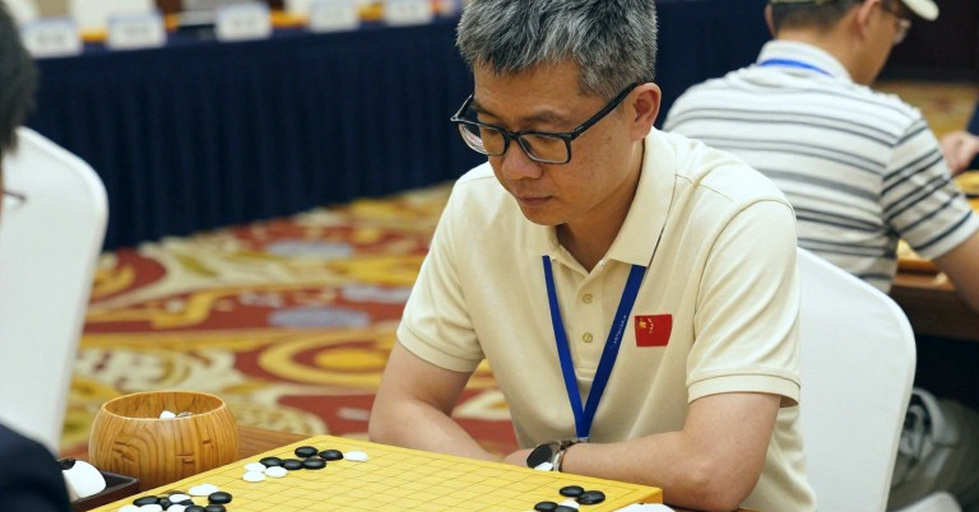
There is another angle: this win re-establishes So's primacy in the domestic event, while on the international stage Caruana has long been counted among the strongest contenders for the world title. This gap between domestic and international performance is common in chess — format, familiar opponents and mental setup change a great deal.
Opening preparation: the part of the game behind the curtain
What works hardest behind a tiebreak result is opening preparation. At the top level today, players prepare the first 15–20 moves with the help of computer engines, and that preparation is often where an edge is built or broken.
In this context, the market for chess instructional material keeps growing. Players from club level up to International Master level look for courses that help them avoid long theory and offer practical plans. The central promise of such courses is that whatever the opponent plays, you have a clear plan available.
Bulgarian International Master and trainer Valeri Lilov's recent video course belongs to this category. It focuses on the White systems chosen after 1.d4 that traditionally avoid heavy theory — the London System, the Colle, the Trompowsky and the Torre Attack. The course's logic is straightforward: White players often decline 2.c4 precisely to avoid the long theory of the Slav, Semi-Slav, Queen's Gambit Accepted and Orthodox Queen's Gambit. Black must therefore be ready for these alternative systems too.
Technical review: strengths and limits
Two things stand out when evaluating such instructional material. First, it addresses a real and large market need — most players below 2200 deliberately choose low-theory systems because of time constraints. Second, it is not elite-level preparation material, because no sample line, engine verification or database statistics are mentioned.
One further point is worth noting. The course description states "six instructive videos", yet the list counts seven distinct openings — Colle, Trompowsky, Torre, London, Catalan, Blackmar-Diemer Gambit and Richter-Veresov. This inconsistency may be resolved by a combined video, or it may be loose marketing arithmetic. Separately, presenting the Catalan as an "anti-theory" system is technically misleading, since the Catalan is a mainline opening played at 2700+ level.
The road ahead
For So, this win is fuel for confidence, but in chess's crowded calendar every title is followed by a new challenge. For Caruana, this is a setback, but given his ability and experience it should not be read as a crisis. The rivalry between the two will benefit both American and international chess in the years ahead.
As for the data from this event, the available information is limited — the final score of the main event, the tiebreak format and individual game details could not be independently verified. Technical conclusions in this report should therefore be read with caution. What is certain is this: the fourth US title belongs to Wesley So.